How I work
Complex products
Most of my work starts as something people do by hand, one expert at a time. The design job is finding which part to automate and which judgment to protect.
Observation
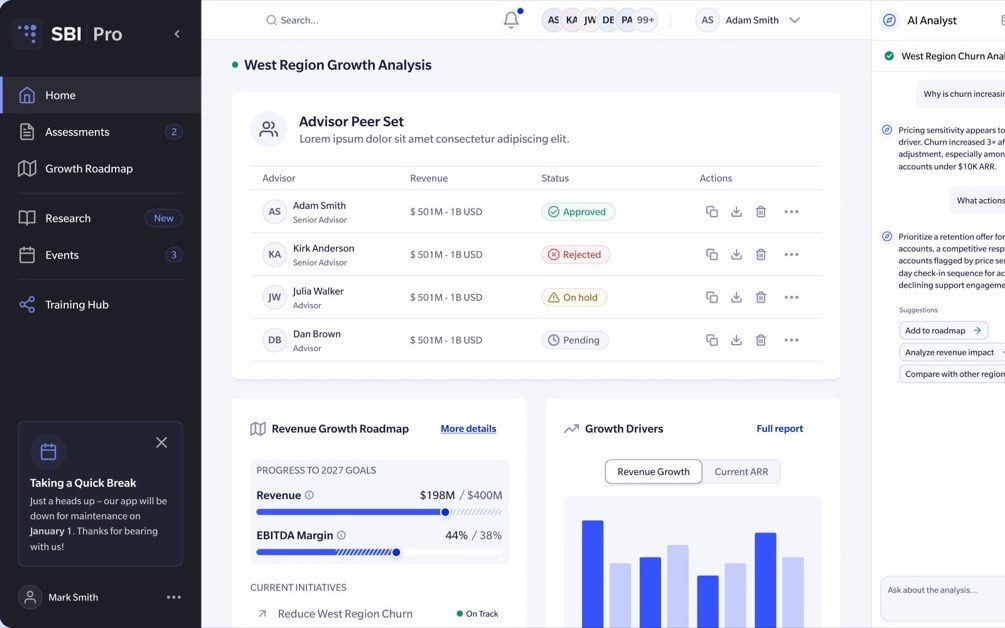
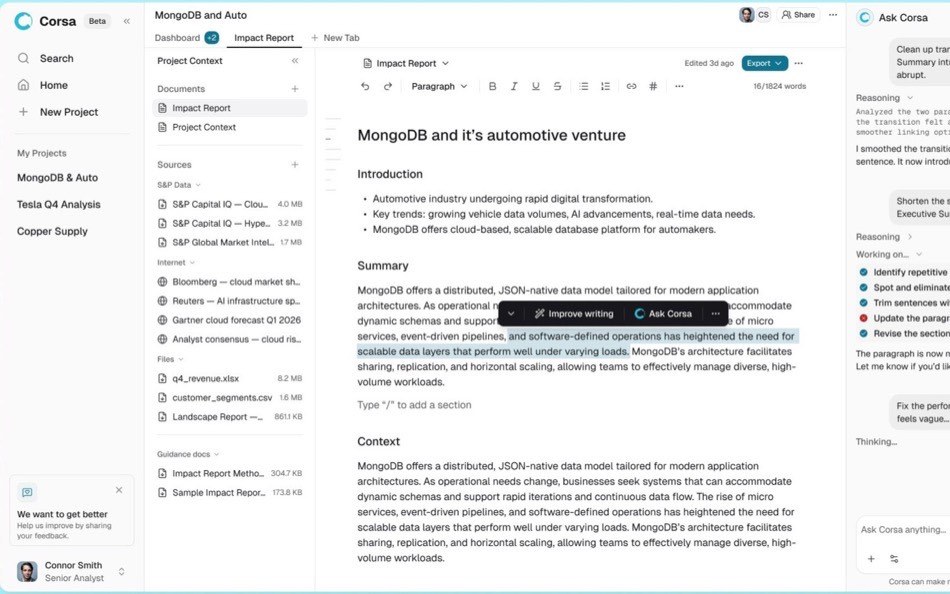
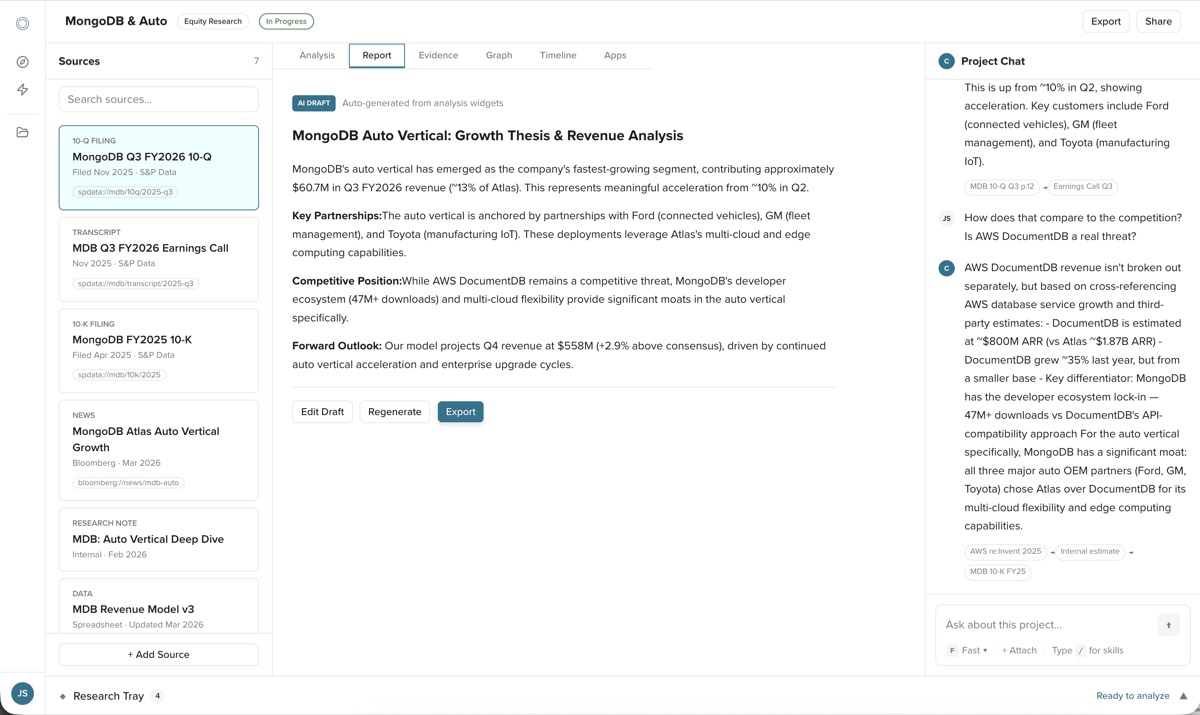
Watch the work, not the opinions about it. Interviews tell you what people think they do. Live sessions show where they stall and what takes the most time. At SBI I interviewed analysts, decision-makers, internal users, and external partners, then observed live workflow sessions and mapped the journey end to end. At S&P Global, analyst interviews and a team design sprint shaped the research workspace before any flow was drawn.
Insight
Find the insight that changes the direction. Research is only useful if it changes something, so I name the insight and say what it changed.
- SBI. Analysts spent most of each engagement gathering and structuring data. The judgment clients paid for came last and was often rushed. So the product automated aggregation, kept the evidence visible, left recommendations editable, and carried the work into planning.
- AI research workspace. Analysts worked in three recurring modes: searching for evidence, monitoring an incoming stream, and synthesizing what they already had. One prompt-first path could not serve all three, so discovery and writing had to live in the same workspace.
Phasing
Turn a service into a product in phases. SBI’s platform did not try to replace the consultancy in one release. First it digitized three repeatable methods as self-service workflows. Then it connected them into one growth roadmap, so separate scores became a plan clients returned to. Only then did it add AI, with the expert’s control kept visible.
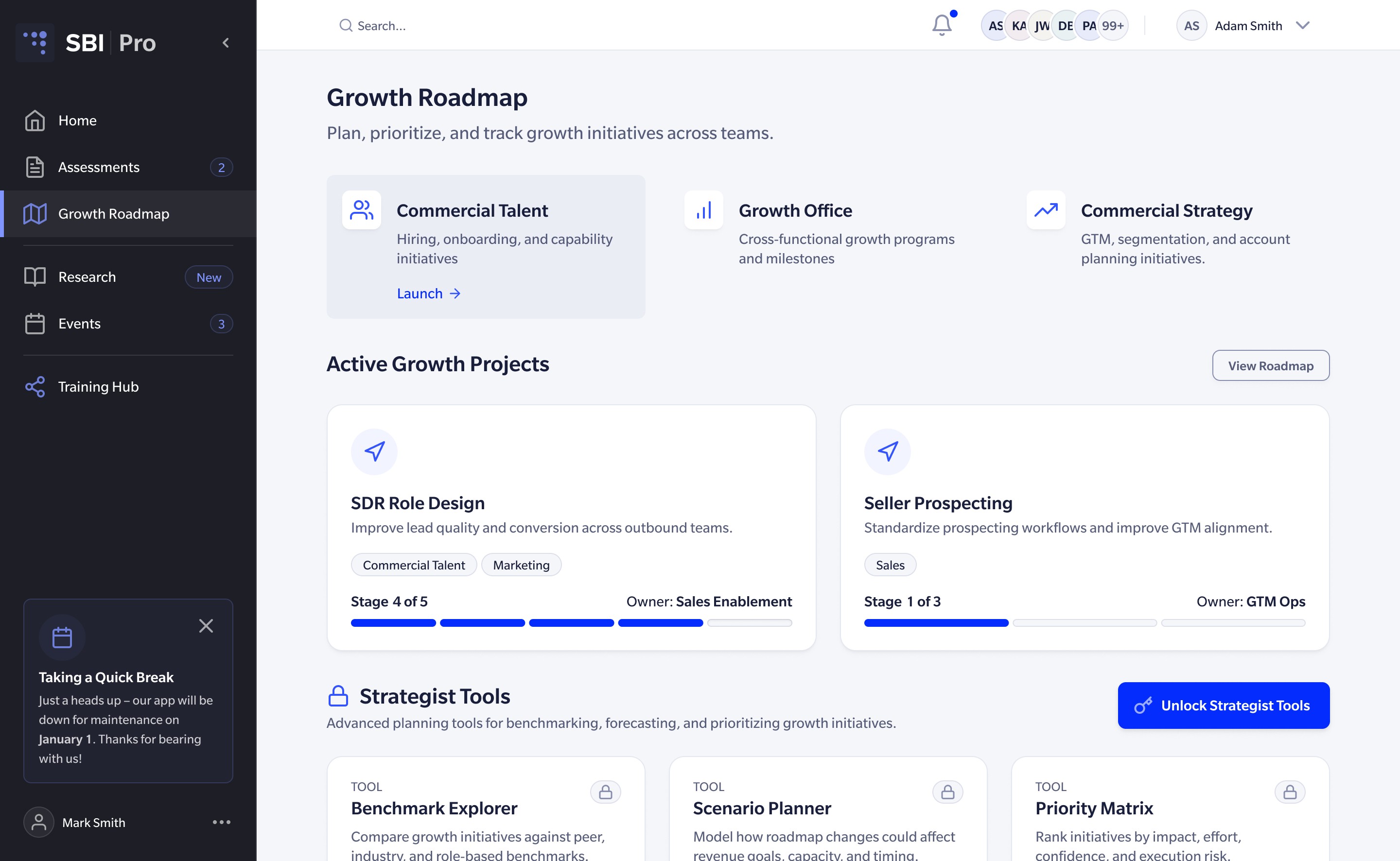
The roadmap turned three separate tools into one plan
Iteration
Iterate with a reason each time. Each version should be built from what the last one exposed. The research workspace went from one-shot generation, to a brief and outline, to integrated discovery, to a collaborative workspace; each step answered a specific failure in the one before. SBI’s report builder moved from template-first to conversation-first once production use showed the template forced decisions too early.
Alternatives
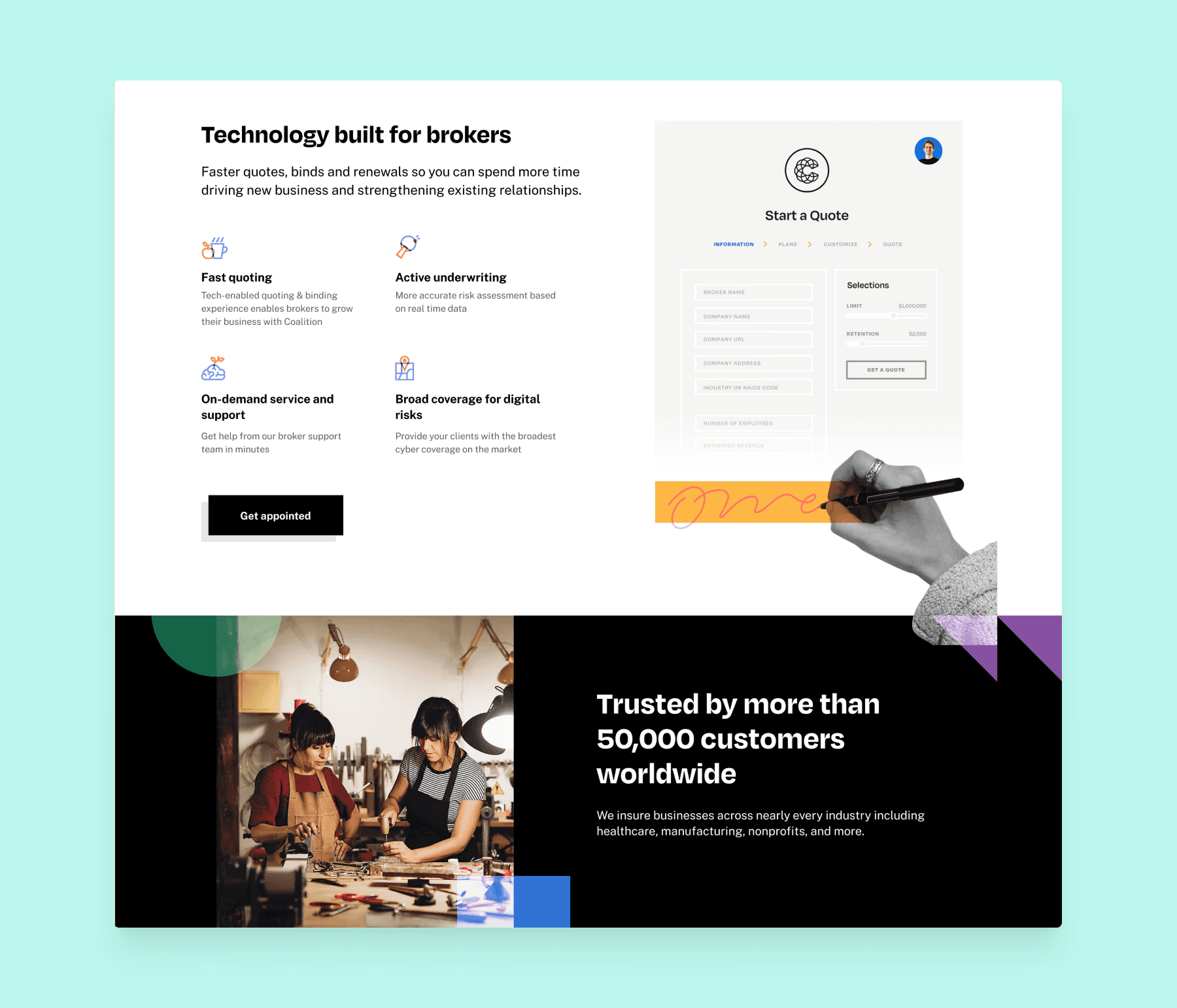
Show the alternative you didn’t take. A decision is only legible next to what it beat. In the research workspace, full automation and a fixed wizard were both rejected, one for trust and one for punishing experienced users. At SBI, a fully automated recommendation flow lost to editable recommendations. At Coalition, a fixed launch date forced a choice between polished pages and a reusable system, and the system won.
Testing
Test before building. Prototype the risky flows while fixing them is still cheap. At Balsam Brands, mobile checkout, filtering, and navigation were tested on prototypes before production, because a problem found in a prototype costs an afternoon and the same problem found after launch costs a release.
Measurement
Measure behavior, not activity. Define the path from first use to recurring use, and say how each number was calculated. For SBI’s platform that path ran from analysis started, to recommendation reviewed, to roadmap item created, to roadmap revisited. The 30% delivery improvement came from comparing median cycle time on comparable Jira stories before and after the shared system, with outliers excluded and the method written down.
Deadlines
Design for a real deadline. Some work is tied to a date that does not move. Coalition’s website had to ship alongside its Series D announcement with an acquired brand folded in. Deciding early that the deliverable was a system, not a set of pages, is what made the date survivable.
Range
| Area | Where |
|---|---|
| Enterprise AI for expert analysts | S&P Global |
| AI-native design and engineering infrastructure | S&P Global |
| 0→1 B2B SaaS, from a consulting practice | SBI |
| Device management software | Kontron |
| Marketing and brand at scale | Coalition |
| Consumer e-commerce, mobile first | Balsam Brands |