Balsam Brands · 2021–2022
Balsam Brands: Redesigning Mobile Shopping for a Seasonal Business
Balsam sells premium seasonal products, most customers shop on mobile, and revenue concentrates in a short window. I redesigned how those customers find products, evaluate them, and check out, and tested the flows before any of it was built.
Season
In a business built on a season, friction has a deadline. A checkout that stalls or a discovery flow that hides the right product does not just hurt a UX score. It loses revenue the calendar will not give back, and there is no fixing it next quarter.
Product detail and trust matter as much as price, and most customers arrive on a phone. I redesigned three parts of the mobile experience: finding products, evaluating them, and completing a purchase.
Discovery
The catalog was large and seasonal, and its filtering followed the catalog’s internal categories. Customers arrived knowing roughly what they wanted and could not get to it.
I restructured filtering around what tree shoppers actually decide on (height, realism, light type, setup, and shape) and made each filter explain its own options, so narrowing down worked the way people already think.
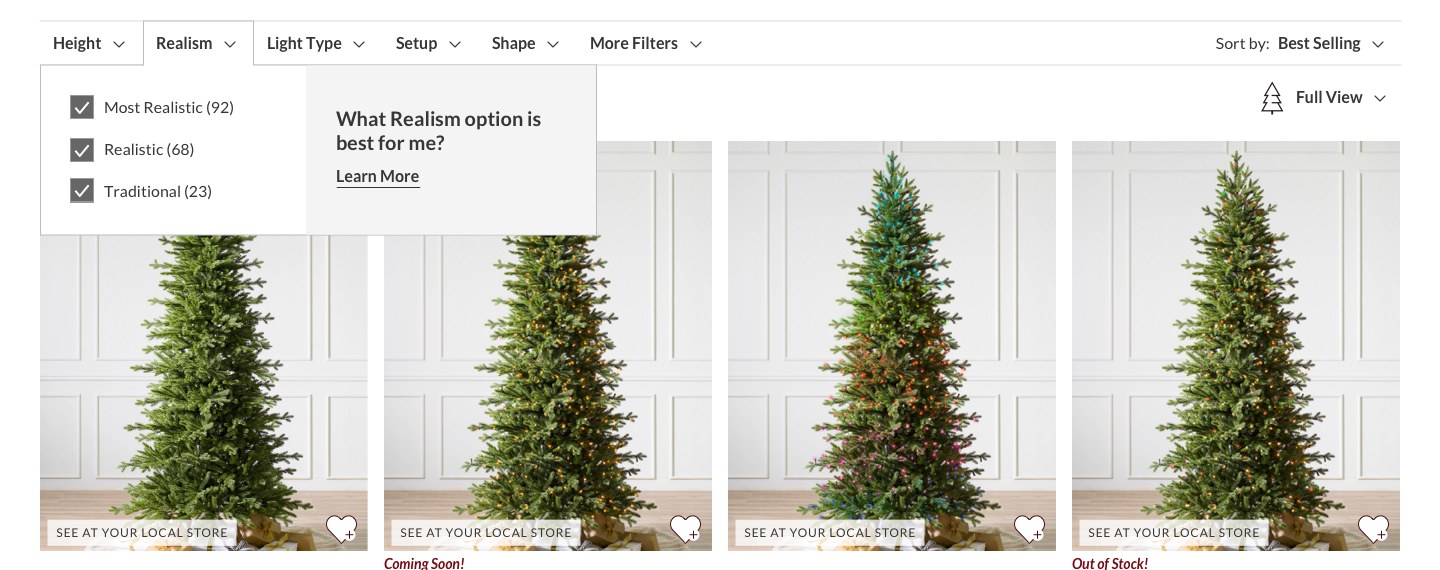
Filters named after the decision, each one explaining its options
Checkout
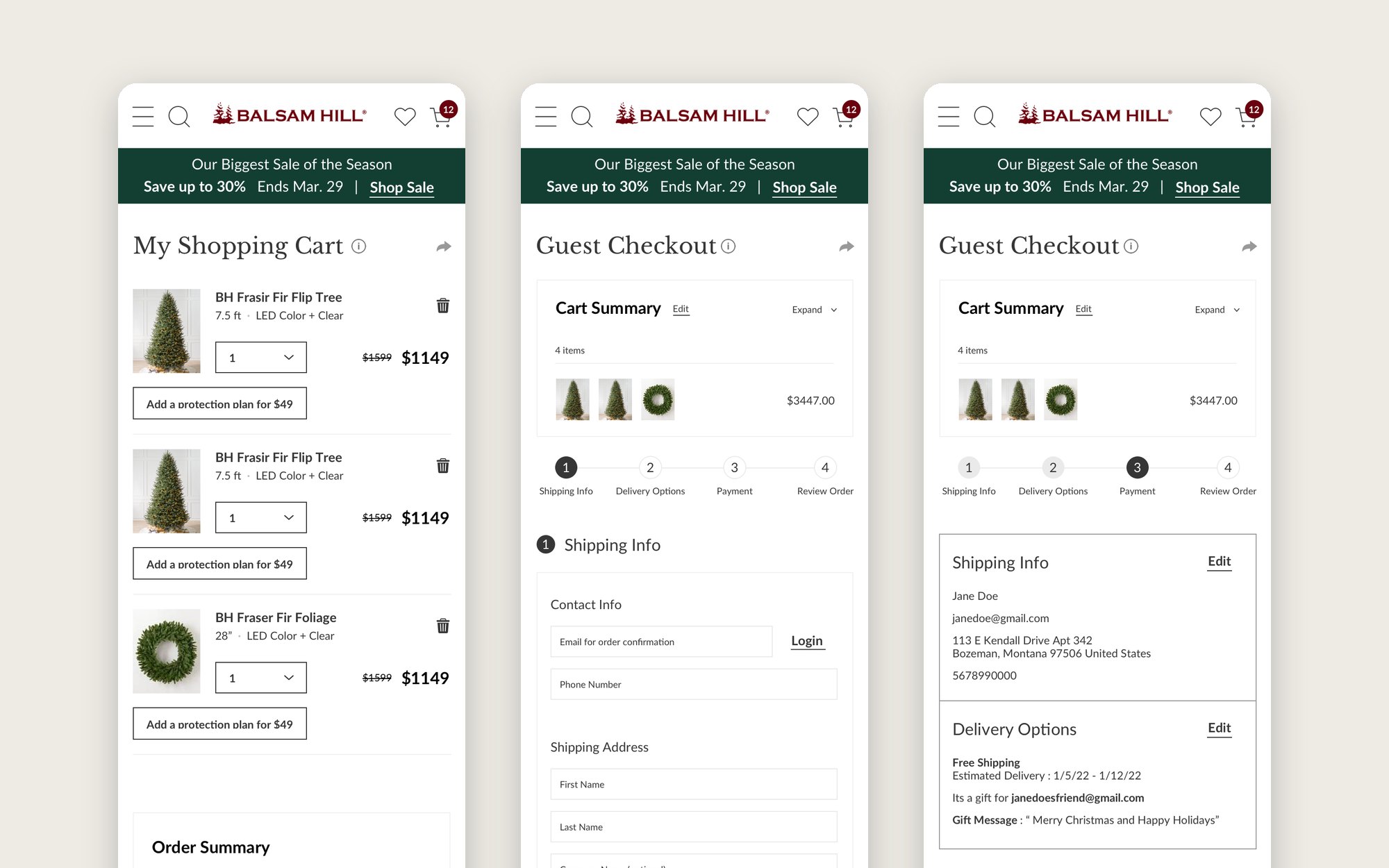
Mobile checkout lost customers at the form and payment steps. The forms were long and asked people to decide and enter data at the same time, the worst moment to add cognitive load.
I reduced that load with clearer step progression, consolidated fields, and more legible payment options. The goal was for completion to feel inevitable once someone had decided to buy.
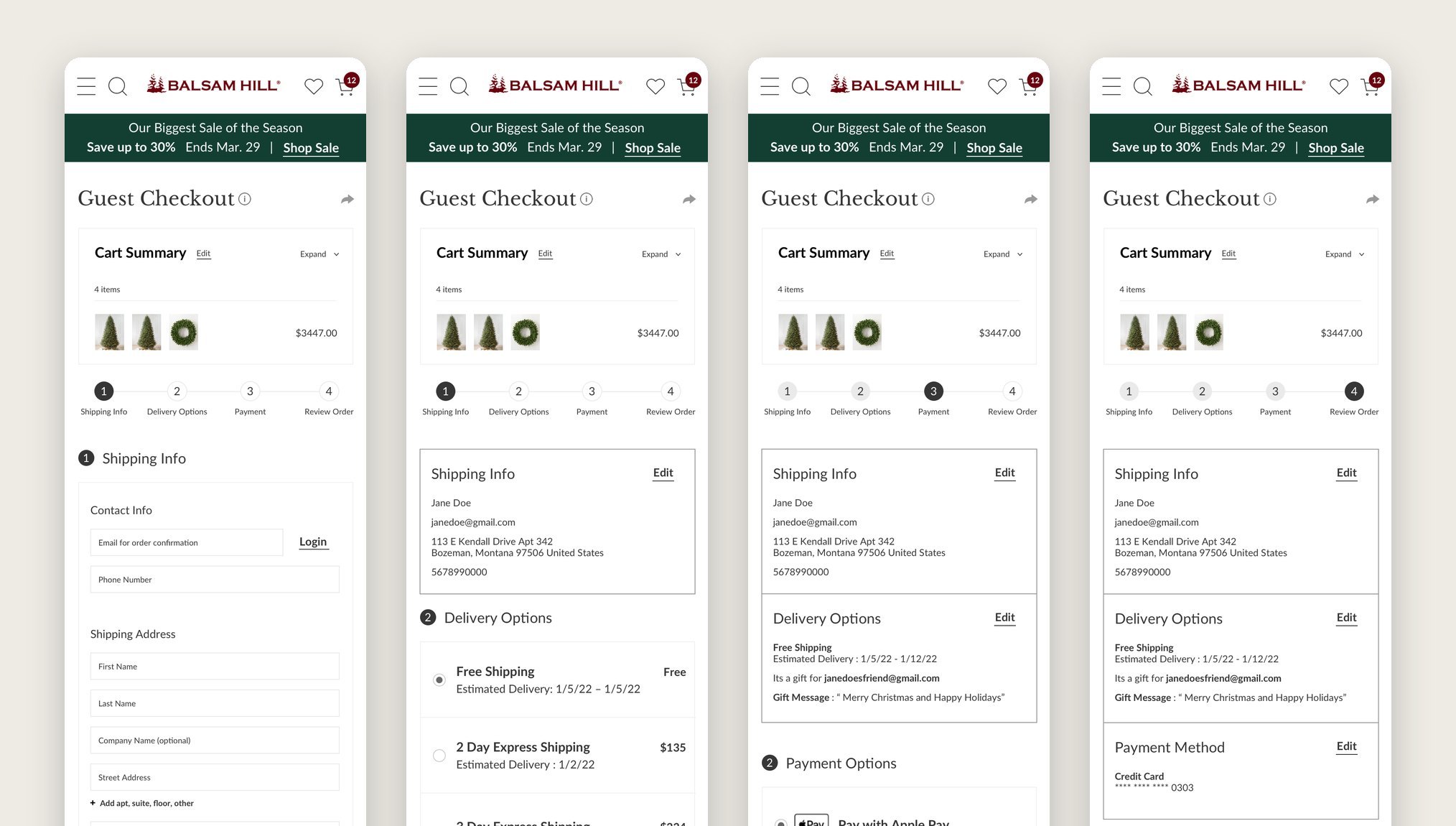
Four numbered steps, with each finished step collapsed into a summary you can edit
The bar for both flows was a shopper’s real conditions: one hand, low patience, and a $200 tree in the cart.
Discovery and checkout had one cause: the flow was built around the catalog’s structure, not the shopper’s decision.
Testing
Before any production work, I tested the shopping flows as prototypes. That surfaced navigation dead ends, unclear calls to action, and form confusion while they were still cheap to fix, instead of mid-season, when there is no time to fix anything.
Lessons
On mobile, in a seasonal business, the cost of friction is immediate and unrecoverable. The discipline that mattered most was testing the flow before building it, a habit I carried into far more complex products later.
Design around the shopper’s decision, not the catalog’s structure.